
全國熱線服務(wù):
新聞資訊 Top label
- The Complete Guide to Pressure Sensors: Technology, Applications, and Selection Criteria
- The Evolution and Advantages of Electro-Hydraulic Synchronous Press Brakes in Modern Manufacturing
- Revolutionizing Semiconductor Manufacturing: The Role of Electrostatic Chucks in Modern Wafer Processing
- What Is A Humidity Sensor? How Does It Affect Our Lives And Work?
- The Essential Guide to Modern Bending Machines: Technology, Applications, and Selection Criteria
- The Complete Guide to Modern Hospital Beds: Transforming Patient Care Through Advanced Design
Honing processing principle
(1) Honing uses one or more oilstones installed on the circumference of the honing head. The expansion mechanism (there are two types of rotary and pusher types) expands the oilstone in the radial direction and presses it against the workpiece hole wall to produce a certain surface contact. At the same time, the honing head is rotated and reciprocated, and the part does not move; or the honing head is only rotated and the workpiece is reciprocated, thereby achieving honing.
(2) In most cases, there is floating between the honing head and the machine tool spindle or between the honing head and the workpiece fixture. In this way, the honing head is guided by the workpiece hole wall during processing. Therefore, the machining accuracy is less affected by the accuracy of the machine tool itself, and the formation of the hole surface basically has the characteristics of the creative process. The so-called creation process is that the whetstone and the hole wall grind and trim each other to form the hole wall and the surface of the whetstone. The principle is similar to the principle of two planar moving plates grinding against each other to form a flat surface.
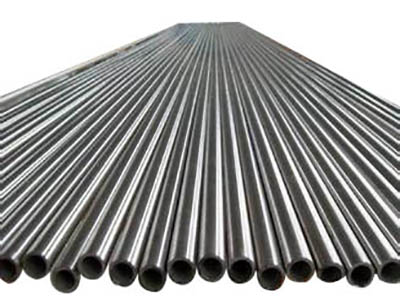 High precision cold drawn tube Click to view product details |
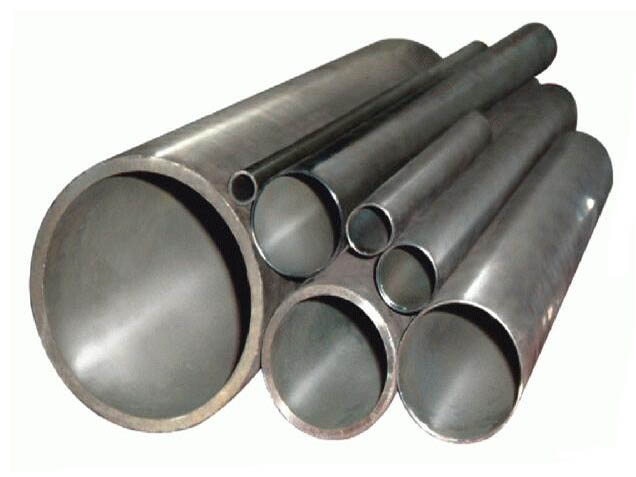 Honing tube Click to view product details |
During honing, due to the rotation and reciprocating motion of the honing head or the reciprocating motion of the honing head rotating the workpiece, the machined surface forms a cross spiral cutting trajectory, and the number of revolutions of the honing head during each reciprocating stroke is not an integer. Therefore, between the two strokes, the honing head is circumferentially staggered at a certain angle relative to the workpiece. This movement prevents the movement trajectory of each abrasive grain on the honing head on the hole wall from being repeated. In addition, every time the honing head rotates, the whetstone and the cutting track of the previous revolution have a certain overlap length in the axial direction, making the connection of the front and rear grinding tracks smoother and more uniform. In this way, during the entire honing process, every point on the hole wall and the whetstone surface has almost an equal chance of interfering with each other. Therefore, as the honing progresses, interference points continue to occur on the surface of the hole and the surface of the whetstone. These interference points are continuously ground away and new and more interference points are generated, which are constantly worn away, so that the contact area between the hole and the surface of the whetstone continues to increase. The degree of mutual interference and the cutting effect continue to weaken, and the roundness and cylindricity of the hole and the whetstone also continue to increase. Finally, the creation process of the hole surface is completed. In order to obtain better cylindricity, when possible, the part is often turned around during honing, or the mutual axial position of the honing head and the workpiece is changed.
One point that needs to be explained: Since the honing oilstone uses diamond and cubic boron nitride abrasives, the wear of the oilstone during processing is very small, that is, the amount of dressing of the oilstone by the workpiece is very small. Therefore, the accuracy of the hole depends to a certain extent on the original accuracy of the whetstone on the honing head. Therefore, when we use diamond and cubic boron nitride oil stones, we must trim the oil stones well before honing to ensure the accuracy of the holes.