
全國熱線服務:
新聞資訊 Top label
- The Complete Guide to Pressure Sensors: Technology, Applications, and Selection Criteria
- The Evolution and Advantages of Electro-Hydraulic Synchronous Press Brakes in Modern Manufacturing
- Revolutionizing Semiconductor Manufacturing: The Role of Electrostatic Chucks in Modern Wafer Processing
- What Is A Humidity Sensor? How Does It Affect Our Lives And Work?
- The Essential Guide to Modern Bending Machines: Technology, Applications, and Selection Criteria
- The Complete Guide to Modern Hospital Beds: Transforming Patient Care Through Advanced Design
Honing tube
當前位置:首頁 > Product Center > Honing tube >
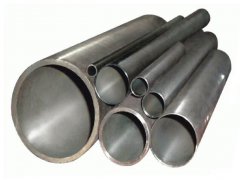
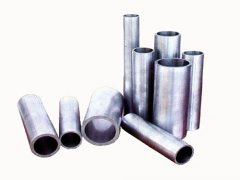
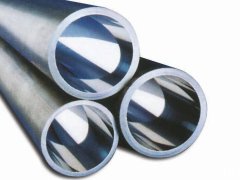


honing pipes are processed by rolling. The pressure left on the surface of the steel pipe has a good sealing effect on the micro cracks on the surface and can prevent the surface from being eroded. This improves the corrosion resistance of the surface and reduces the occurrence and expansion of cracks, thereby enhancing the compressive strength of the honing tube. The roll-formed quilted tube can form a cold work hardening layer on the surface, reducing the elastic and plastic deformation of the contact surface of the grinding pair, thus improving the wear resistance and avoiding burns caused by grinding. The surface roughness after rolling is reduced, which improves the fit of the quilted tube.
The so-called rolling processing is a kind of chip-free processing. It uses the plastic deformation of metal at normal temperature to smooth the surface unevenness, thereby changing the surface structure, mechanical characteristics, properties and size. This rolling processing technology cannot be achieved by grinding, and it meets the requirements of finishing and strengthening at the same time.
The principle of rolling processing is to take advantage of the cold plasticity characteristics of metal at room temperature and use rolling tools to exert a certain pressure on the workpiece to cause plastic flow of the metal on the surface of the workpiece, thereby reducing the roughness of the surface of the workpiece. Due to the plastic deformation of the rolled surface metal, the surface structure is cold hardened and the grains are refined, forming a dense fiber shape, which increases the metal hardness and strength, and improves the wear resistance, corrosion resistance and compatibility of the workpiece surface.
is implemented in accordance with the GB/T8713-88 standard, with production specifications: ∮40~800mm, annual output of 25,000 tons, and 28,000 tons of high-precision cold-drawn pipes and honed pipes with a length within 14m. The products are used in engineering machinery, metallurgical machinery, plastic machinery, hoisting and closing machinery, mining machinery, road construction machinery, textile machinery, glass machinery and other industries.
The so-called rolling processing is a kind of chip-free processing. It uses the plastic deformation of metal at normal temperature to smooth the surface unevenness, thereby changing the surface structure, mechanical characteristics, properties and size. This rolling processing technology cannot be achieved by grinding, and it meets the requirements of finishing and strengthening at the same time.
The principle of rolling processing is to take advantage of the cold plasticity characteristics of metal at room temperature and use rolling tools to exert a certain pressure on the workpiece to cause plastic flow of the metal on the surface of the workpiece, thereby reducing the roughness of the surface of the workpiece. Due to the plastic deformation of the rolled surface metal, the surface structure is cold hardened and the grains are refined, forming a dense fiber shape, which increases the metal hardness and strength, and improves the wear resistance, corrosion resistance and compatibility of the workpiece surface.
is implemented in accordance with the GB/T8713-88 standard, with production specifications: ∮40~800mm, annual output of 25,000 tons, and 28,000 tons of high-precision cold-drawn pipes and honed pipes with a length within 14m. The products are used in engineering machinery, metallurgical machinery, plastic machinery, hoisting and closing machinery, mining machinery, road construction machinery, textile machinery, glass machinery and other industries.