
全國熱線服務(wù):
新聞資訊 Top label
- The Complete Guide to Pressure Sensors: Technology, Applications, and Selection Criteria
- The Evolution and Advantages of Electro-Hydraulic Synchronous Press Brakes in Modern Manufacturing
- Revolutionizing Semiconductor Manufacturing: The Role of Electrostatic Chucks in Modern Wafer Processing
- What Is A Humidity Sensor? How Does It Affect Our Lives And Work?
- The Essential Guide to Modern Bending Machines: Technology, Applications, and Selection Criteria
- The Complete Guide to Modern Hospital Beds: Transforming Patient Care Through Advanced Design
Causes of Cold Drawn Steel Pipe Fracture
For example: when there are precipitates on the grain boundaries, regardless of whether their strength is stronger or weaker than the matrix strength, it is the cause of cracks; the segregation of inclusions on the grain boundaries is also the cause of fracture; in addition, even under the action of alternating loads that are far less than the yield limit, fatigue fracture will also occur.
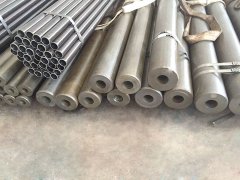
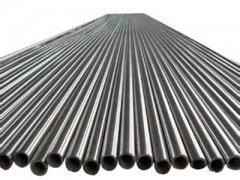

Generally speaking, the mechanical performance indicators used in the design of hydraulic (pneumatic) parts assume that the material is uniform, continuous, and isotropic. Analysis based on this method is considered to be a safe design, but accidental fractures sometimes occur. Research has found that in the process of low-stress brittle fracture occurring in high-strength metal materials, the material structure is far from uniform and isotropic.
There will be cracks, inclusions, pores and other defects in the structure. These defects can be regarded as micro-cracks in the material. In addition, brittle fracture is also related to the service temperature of the component. Through research, people have found that when the temperature is lower than a certain temperature value, the material will transform into a brittle state, and its impact absorption energy will decrease significantly. This phenomenon is called cold brittleness. Therefore, materials with a suitable cold brittleness transition temperature must be selected according to the working temperature of the component during design.