
全國熱線服務:
新聞資訊 Top label
- The Complete Guide to Pressure Sensors: Technology, Applications, and Selection Criteria
- The Evolution and Advantages of Electro-Hydraulic Synchronous Press Brakes in Modern Manufacturing
- Revolutionizing Semiconductor Manufacturing: The Role of Electrostatic Chucks in Modern Wafer Processing
- What Is A Humidity Sensor? How Does It Affect Our Lives And Work?
- The Essential Guide to Modern Bending Machines: Technology, Applications, and Selection Criteria
- The Complete Guide to Modern Hospital Beds: Transforming Patient Care Through Advanced Design
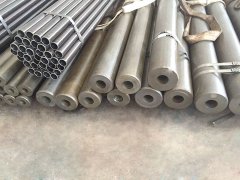
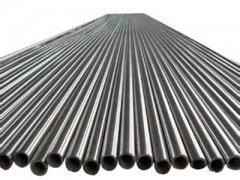
Analysis of fracture phenomena of precision cold-drawn steel pipes
The grain size of qualified steel pipes is above level 5, the matrix structure is: pearlite + ferrite, and the grain structure is consistent in size and evenly distributed. The grain size of steel pipes that are prone to fracture is grade 2 to 3. The matrix structure is: pearlite + reticular ferrite, mixed grains. There are also banded structures and Widmanstatten structures. The grain sizes are different and there are many defects at the grain boundaries. In particular, Widmanstatten structure is an overheating defect that has a very bad impact on performance. Because the needle pieces of Widmanstatten ferrite or cementite split the steel matrix horizontally and vertically, forming many fragile surfaces, the strength is reduced and the brittleness is increased.

The grain size of a metal has a great influence on many properties of the metal. From a microscopic analysis, the effect of grain size is essentially the effect of the size of the grain boundary area. Regarding the normal temperature mechanical properties of metals, generally the smaller the grains, the higher the strength and hardness, and the better the plasticity and toughness.
Because the smaller the grains, the greater the number of grains in a certain volume. Under the same amount of deformation, the deformation is dispersed in more grains. The difference in strain degree inside the grains and near the grain boundaries is small, and the deformation is more uniform. Relatively speaking, the stress concentration caused is reduced, and the chance of cracking is reduced accordingly.