全國熱線服務:
新聞資訊 Top label
- The Complete Guide to Pressure Sensors: Technology, Applications, and Selection Criteria
- The Evolution and Advantages of Electro-Hydraulic Synchronous Press Brakes in Modern Manufacturing
- Revolutionizing Semiconductor Manufacturing: The Role of Electrostatic Chucks in Modern Wafer Processing
- What Is A Humidity Sensor? How Does It Affect Our Lives And Work?
- The Essential Guide to Modern Bending Machines: Technology, Applications, and Selection Criteria
- The Complete Guide to Modern Hospital Beds: Transforming Patient Care Through Advanced Design
What kind of steel should I choose for large-diameter thin-walled rolled pipes?
cylinder head
Castings are used for low pressure, HT300 gray iron for medium and low pressure, and No. 35 and 45 steel for medium and high pressure. When the cylinder head itself is a guide sleeve for the piston rod, the best choice for the cylinder head is cast iron. At the same time, wear-resistant materials such as brass and bronze should be melted on the guide surface of the rolled pipe. If the structure of the guide sleeve is pressed into the guide sleeve, the guide sleeve should be of wear-resistant cast iron, bronze or brass. Commonly used materials for pistons include wear-resistant cast iron, gray cast iron (HT300, HT350), steel and aluminum alloy. The coaxiality tolerance value of the piston and piston rod should be 0.03mm.
Cylinder barrel
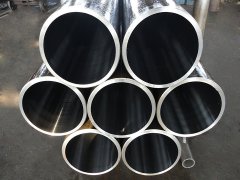
Commonly used materials are seamless steel pipes 20, 35 and 45,Rolled tubeHoned or rolled to meet roughness requirements within 0.4m. The low-pressure cylinder can use twenty steel pipes, and the high-pressure cylinder can use forty-five steel pipes.
Piston rod
There are two types of piston rods: solid rods and hollow rods. One end of the hollow piston rod needs to be used for welding and heat treatment. The solid piston rod material for heat treatment is 3545 steel, and the hollow piston rod material is 3545 seamless steel pipe. After rough machining, the piston rod is quenched and tempered to 229~255Hb, with a hardness of 45~55°C if necessary. After high-frequency quenching treatment, it is quenched in India.