全國熱線服務:
新聞資訊 Top label
- The Complete Guide to Pressure Sensors: Technology, Applications, and Selection Criteria
- The Evolution and Advantages of Electro-Hydraulic Synchronous Press Brakes in Modern Manufacturing
- Revolutionizing Semiconductor Manufacturing: The Role of Electrostatic Chucks in Modern Wafer Processing
- What Is A Humidity Sensor? How Does It Affect Our Lives And Work?
- The Essential Guide to Modern Bending Machines: Technology, Applications, and Selection Criteria
- The Complete Guide to Modern Hospital Beds: Transforming Patient Care Through Advanced Design
Briefly introduce the commonly used methods for hardness testing of cold drawn tubes
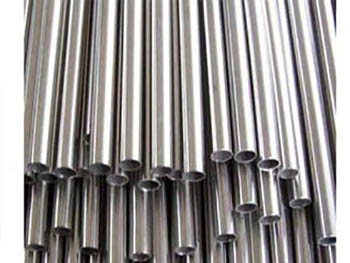
Many customers who purchase cold-drawn pipe materials to make products have requirements for their hardness. For example, can the hardness of a certain specification of cold-drawn steel welded pipes meet the requirements?
Hardness is a performance index that measures the softness and hardness of a material. There are many methods of hardness testing, the principles are different, and the measured hardness values ??and meanings are also different. The most commonly used is the static load intrusion hardness test, that is, Brinell hardness HB, Rockwell hardness HRA, HRB, HRC, Vickers hardness H, etc. The hardness value indicates the ability of the material surface to resist the intrusion of hard objects. Leeb hardness Hl and Shore hardness HS belong to the rebound hardness test, and their values ??represent the elastic deformation work of the metal. Therefore, hardness is not a simple physical quantity, but a comprehensive performance index that reflects the elasticity, plasticity, strength and toughness of the material.
The Rockwell hardness of cold drawn tubes is commonly used in machinery factories. It is a hardness test of parts after heat treatment, usually Rockwell hardness test. The Rockwell hardness test method for cold drawn steel is used because of its simplicity. Whether it is Brinell hardness or Vickers hardness, the test method requires measuring the diameter and diagonal length of the pit made by the indenter, which is very troublesome. The Rockwell hardness test method is the same as using an indenter to make pits, but the hardness value can be judged by the depth of the pits. Therefore, the testing machine can directly display the size of the pit without the need for measurement. As long as the test action of pressing with the indenter is used, the hardness value can be obtained.
Hardness is a performance index that measures the softness and hardness of a material. There are many methods of hardness testing, the principles are different, and the measured hardness values ??and meanings are also different. The most commonly used is the static load intrusion hardness test, that is, Brinell hardness HB, Rockwell hardness HRA, HRB, HRC, Vickers hardness H, etc. The hardness value indicates the ability of the material surface to resist the intrusion of hard objects. Leeb hardness Hl and Shore hardness HS belong to the rebound hardness test, and their values ??represent the elastic deformation work of the metal. Therefore, hardness is not a simple physical quantity, but a comprehensive performance index that reflects the elasticity, plasticity, strength and toughness of the material.
The Rockwell hardness of cold drawn tubes is commonly used in machinery factories. It is a hardness test of parts after heat treatment, usually Rockwell hardness test. The Rockwell hardness test method for cold drawn steel is used because of its simplicity. Whether it is Brinell hardness or Vickers hardness, the test method requires measuring the diameter and diagonal length of the pit made by the indenter, which is very troublesome. The Rockwell hardness test method is the same as using an indenter to make pits, but the hardness value can be judged by the depth of the pits. Therefore, the testing machine can directly display the size of the pit without the need for measurement. As long as the test action of pressing with the indenter is used, the hardness value can be obtained.